IT Manager: Skills, Job Opportunities, and Step-by-Step Career Guide
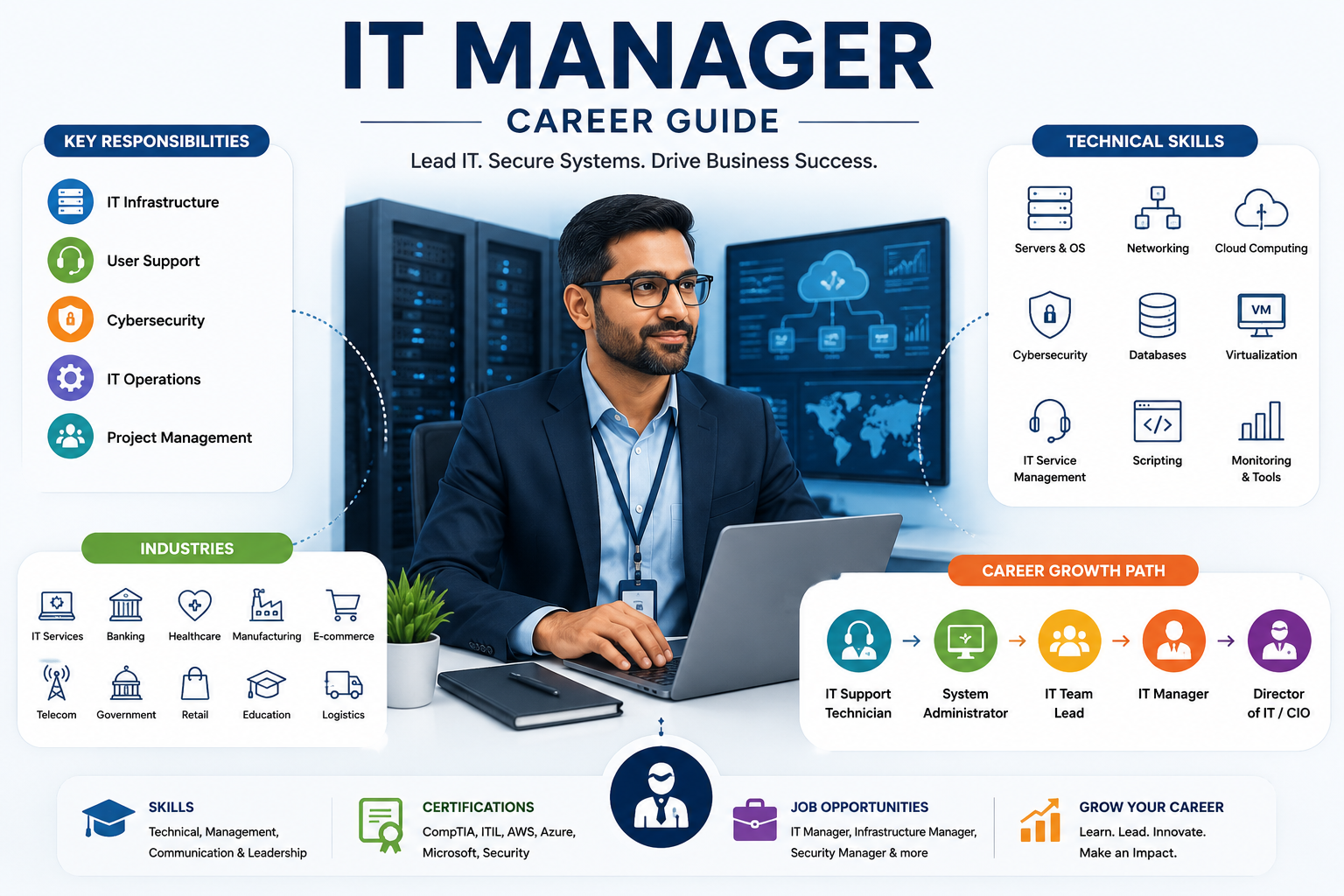
An IT Manager is responsible for planning, implementing, securing, and maintaining an organization's information technology infrastructure. Unlike a Software Development Manager, who focuses on building software, an IT Manager focuses on keeping the company's technology systems running efficiently and securely.
What Does an IT Manager Do?
IT Infrastructure
- Manage servers
- Maintain computer networks
- Manage internet connectivity
- Oversee data centers
- Manage cloud infrastructure
User Support
- Manage IT helpdesk
- Resolve technical issues
- Install and maintain hardware
- Support employees with IT needs
Cybersecurity
- Protect company data
- Manage firewalls
- Implement security policies
- Handle backup and disaster recovery
- Monitor cyber threats
IT Operations
- Manage software licenses
- Plan IT budgets
- Purchase hardware and software
- Monitor system performance
- Manage IT vendors
Project Management
- Lead IT projects
- Implement new systems
- Coordinate technology upgrades
- Ensure projects are completed on time
Technical Skills Required
Operating Systems
- Windows Server
- Linux
- macOS (basic administration)
Networking
- TCP/IP
- DNS
- DHCP
- VPN
- Routing & Switching
- Network troubleshooting
Cloud Computing
- Amazon Web Services (AWS)
- Microsoft Azure
- Google Cloud Platform (GCP)
Cybersecurity
- Firewalls
- Antivirus
- Identity & Access Management (IAM)
- Multi-Factor Authentication (MFA)
- Endpoint security
- Security monitoring
Virtualization
- VMware
- Hyper-V
- VirtualBox
Databases
- MySQL
- Microsoft SQL Server
- PostgreSQL
IT Service Management
- ITIL concepts
- Incident management
- Change management
- Asset management
- Service desk operations
Scripting (Helpful)
- PowerShell
- Bash
- Python (for automation)
Management Skills
- Leadership
- Team management
- Communication
- Budget planning
- Vendor management
- Risk management
- Problem-solving
- Decision-making
- Project management
- Time management
- Negotiation
Software & Tools
- Microsoft 365 Admin Center
- Active Directory
- Microsoft Intune
- ServiceNow
- Jira Service Management
- SolarWinds
- Nagios
- Zabbix
- Wireshark
- VMware vSphere
Industries Hiring IT Managers
|
Industry
|
Demand
|
|
IT Services
|
⭐⭐⭐⭐⭐
|
|
Banking & Financial Services
|
⭐⭐⭐⭐⭐
|
|
Healthcare
|
⭐⭐⭐⭐
|
|
Manufacturing
|
⭐⭐⭐⭐
|
|
E-commerce
|
⭐⭐⭐⭐
|
|
Telecommunications
|
⭐⭐⭐⭐
|
|
Government
|
⭐⭐⭐⭐
|
|
Retail
|
⭐⭐⭐⭐
|
|
Education
|
⭐⭐⭐
|
|
Logistics
|
⭐⭐⭐⭐
|
Job Opportunities
Entry-Level
- IT Support Technician
- Help Desk Executive
- Desktop Support Engineer
- Network Support Engineer
- System Administrator
Mid-Level
- Network Administrator
- Systems Administrator
- Cloud Administrator
- IT Infrastructure Engineer
- Security Analyst
Management
- IT Manager
- Infrastructure Manager
- Information Security Manager
- IT Operations Manager
- Head of IT
- Director of IT
- Chief Information Officer (CIO)
Step-by-Step Guide
Stage 1: Learn Computer Fundamentals (1–2 Months)
Study:
- Computer hardware
- Operating systems
- Networking basics
- Troubleshooting
- File systems
Books
- CompTIA A+ Certification All-in-One Exam Guide
Stage 2: Learn Networking (2 Months)
Study:
- IP addressing
- TCP/IP
- DNS
- DHCP
- VLANs
- VPNs
- Routing and switching
Books
- CompTIA Network+ Certification All-in-One Exam Guide
Stage 3: Learn Windows & Linux Administration (2 Months)
Topics:
- Windows Server
- Active Directory
- Group Policy
- Linux user management
- Shell commands
- Server administration
Stage 4: Learn Cloud Computing (2 Months)
Choose one platform:
- AWS
- Microsoft Azure
- Google Cloud Platform
Study:
- Virtual machines
- Storage
- Networking
- IAM
- Monitoring
Stage 5: Learn Cybersecurity (2 Months)
Study:
- Firewalls
- Endpoint security
- Encryption
- Identity management
- Backup and disaster recovery
- Security best practices
Books
Stage 6: Learn IT Service Management (1 Month)
Learn:
- ITIL principles
- Incident management
- Change management
- Problem management
- Service desk operations
Stage 7: Leadership & Project Management (2 Months)
Study:
- Team leadership
- Vendor management
- Budgeting
- Communication
- Risk management
- Agile basics
Books
- The Phoenix Project
- The Effective Executive
Daily Responsibilities
- Monitor IT systems and networks
- Resolve major technical issues
- Manage IT staff
- Plan technology upgrades
- Maintain cybersecurity controls
- Review system performance
- Coordinate with vendors
- Approve IT purchases
- Manage backups and disaster recovery
- Prepare IT reports and budgets
Best Books
- CompTIA A+ Certification All-in-One Exam Guide
- CompTIA Network+ Certification All-in-One Exam Guide
- Cybersecurity Essentials
- The Phoenix Project
- The Practice of System and Network Administration
12–18 Month Learning Roadmap
|
Months
|
Focus
|
|
1–2
|
Computer hardware, operating systems, networking basics
|
|
3–4
|
Windows Server, Linux administration, Active Directory
|
|
5–6
|
Networking, routers, switches, DNS, VPNs
|
|
7–8
|
Cloud computing (AWS, Azure, or GCP)
|
|
9–10
|
Cybersecurity and backup strategies
|
|
11–12
|
ITIL, IT operations, monitoring tools, scripting
|
|
13–15
|
Lead small IT projects, manage infrastructure, build automation
|
|
16–18
|
Leadership, budgeting, vendor management, and interview preparation
|
Career Growth
- IT Support Technician
- Desktop Support Engineer
- System Administrator / Network Administrator
- Senior System Administrator
- IT Team Lead
- IT Manager
- Senior IT Manager
- Head of IT
- Director of IT
- Chief Information Officer (CIO)
Typical Qualifications
Many employers prefer a bachelor's degree in computer science, information technology, or a related field. However, experienced professionals with strong technical skills, industry certifications (such as CompTIA, Cisco, Microsoft, AWS, or ITIL), and a proven track record managing IT systems and teams can also qualify for IT management roles, particularly in smaller organizations or after progressing through hands-on technical positions.